

Hungry or Hurt? — Getting Right with Food
Listen to the Episode

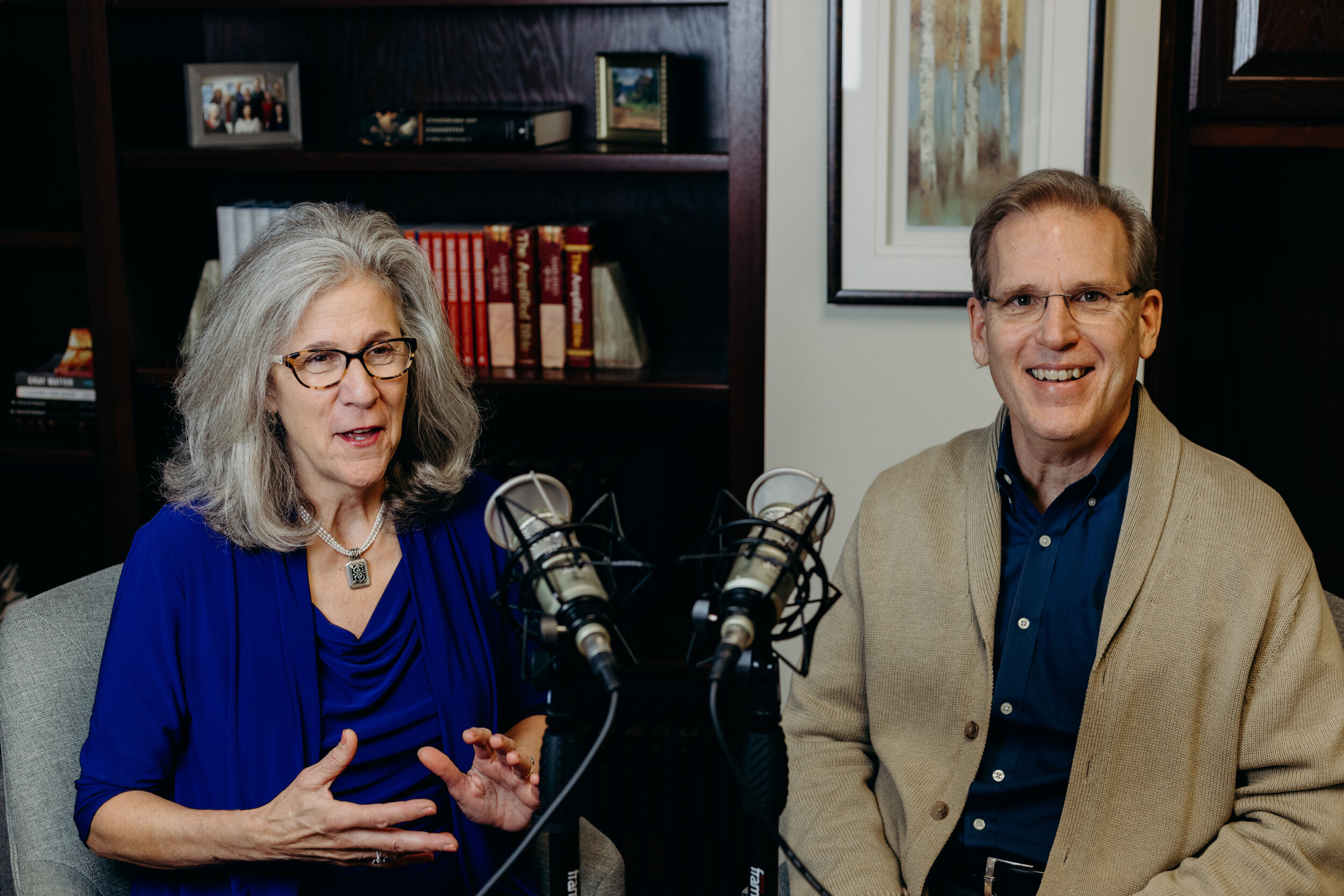

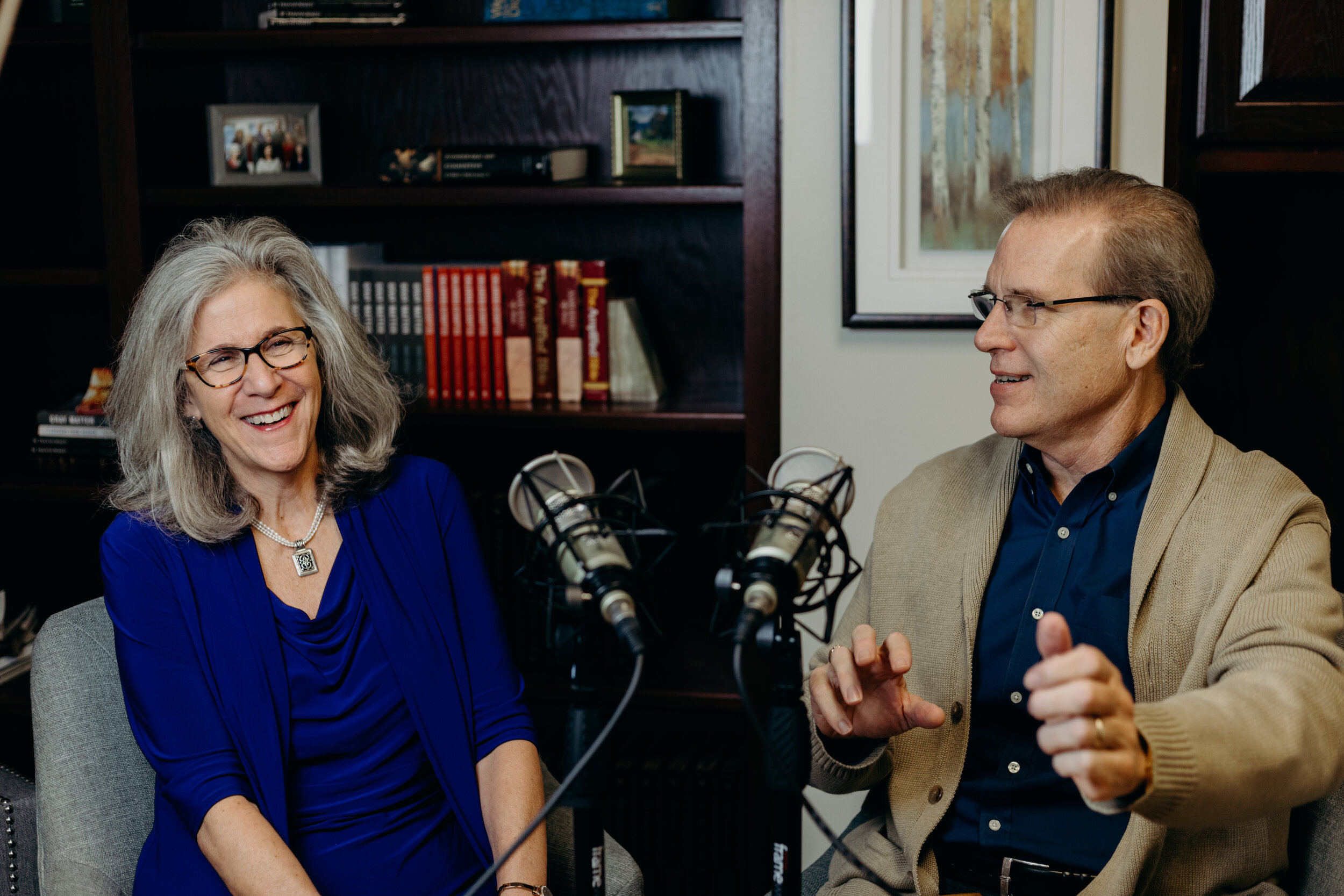
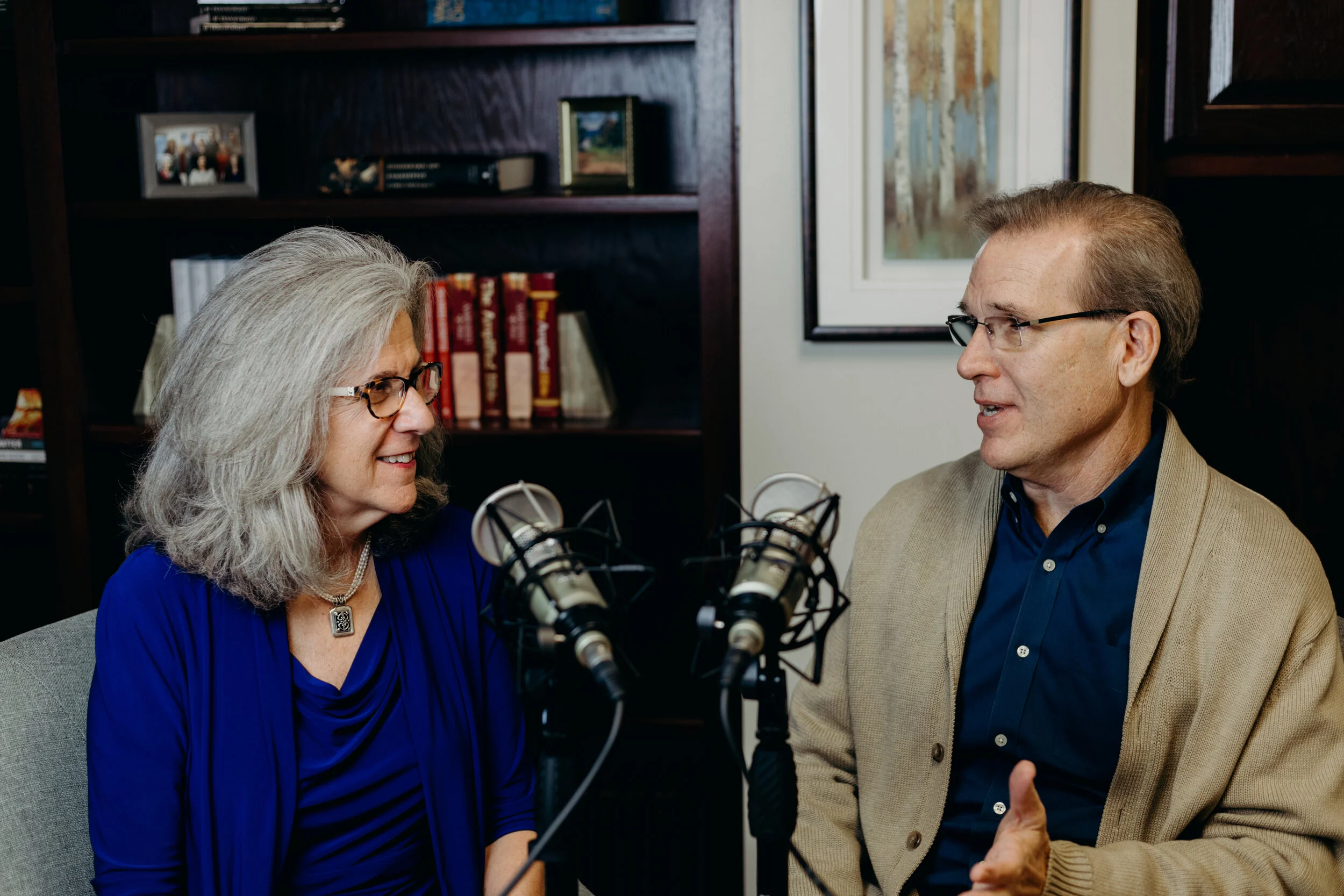
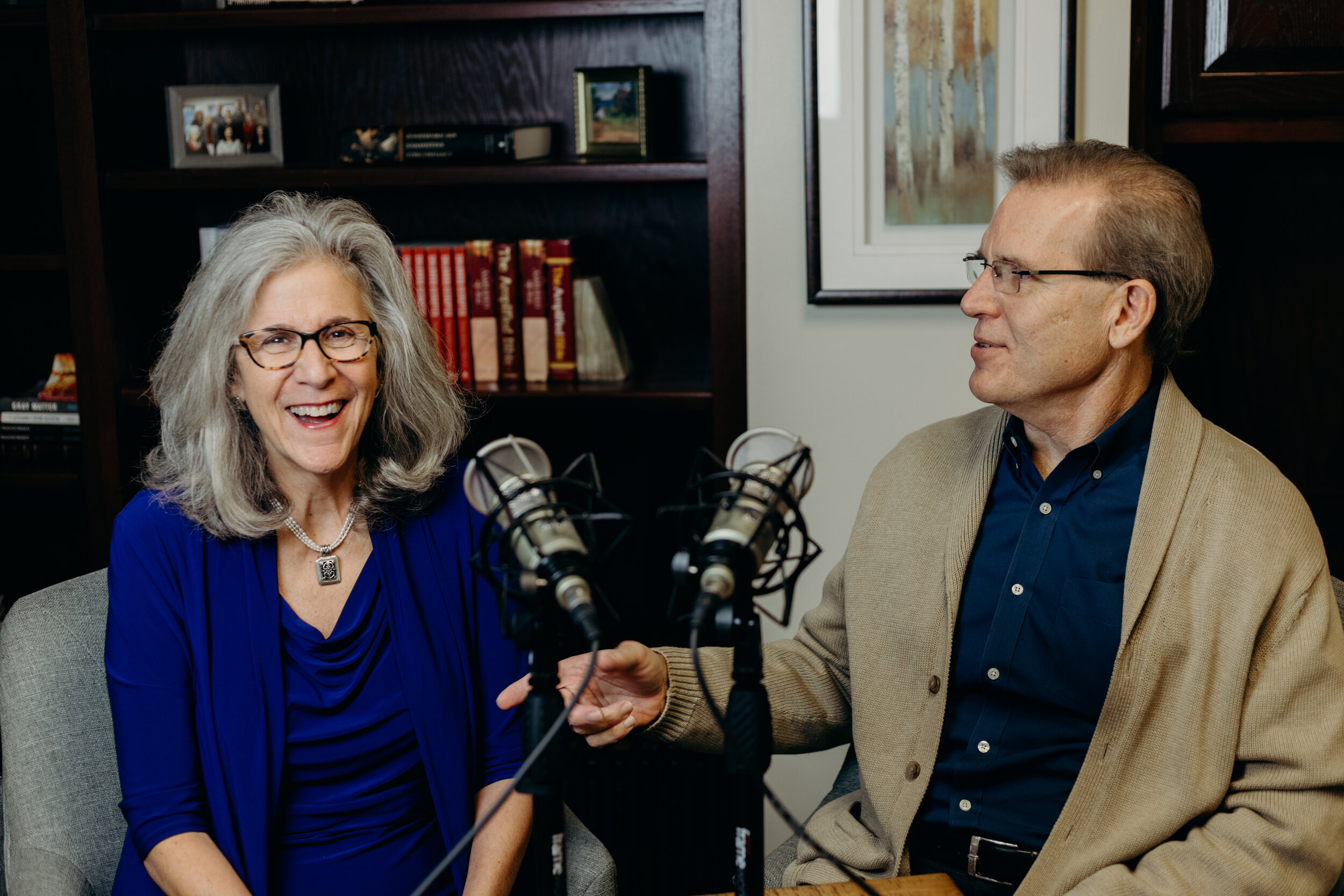
Summary
Food is for the body and God is for the soul. When food is used to comfort instead of going to God for the divine comfort we need, it can lead to an unhealthy dependency in which food begins to control us.
When that happens, we're drawn to food to feed what is really a spiritual hunger for peace. This leads to eating more than we need for our bodies, which can threaten our health and rob our peace. In this podcast, we offer God's pathway to getting right with food.
In His Grace and Peace,
John and Beth Murphy
-
John Murphy:
This is the Rockhouse Center podcast, and I'm John Murphy.Beth Murphy:
I'm Beth Murphy, and we're talking today about getting right with food.John Murphy:
It's such a common condition that we see in our culture is this new relationship that we have grown into over the decades with food. And the obesity rates are up, the amount of health issues that have come along with it, it's costing us billions of dollars in health care because of weight issues. All of the things that people are doing to try to deal with their weight is not working. Their weight loss programs, other medical interventions. But the whole problem of overeating and obesity in our country has just grown over the years. And we are now at a place, if you were to add the generally obese with the severely obese people, then you're talking about 58% of the people in our culture. And so something is really amiss here because obviously, what's happening is that people are eating beyond the needs of their body. If you didn't eat beyond the needs of your body, you would not have a weight issue. So something is stirring that has caused people to become more and more dependent on food for something that the body doesn't need. So what is it that we are doing with food? Why do we eat beyond the need of our body? And that's what we really want to take on today in this podcast.Beth Murphy:
Not just the outward indication of obesity, because we can have a tremendous problem with food, but not actually be obese, because it's been dealt with in one way or another so we don't have the physical appearance of being tremendously overweight, but still have all the heart issues and the struggle with food going on. And so in looking at what we want to examine today in terms of what's happening with this has all to do with food becoming more of an answer than just meeting our physical needs. Food is for the body, but it's gotten to where we're now using it to manage how we feel about life and manage our emotions. And so one of the big indicators of that we've just watched happen over, I guess, a couple of recent decades would be that it used to be inappropriate, really, to talk about comfort food. Comfort food was not a thing, and you would have been embarrassed to really to talk about eating for comfort. But somewhere along the way, it became a food type or almost like a genre, so to speak. And so you have cookbooks, restaurants, menus, recipes, things having to do with types of food that are designed to make you feel comforted by what you're eating, which of course has never been God's intent for food. And if you just look at the way in which food is advertised, candy ads that are really luring you in with the promise of altering your state of mind through eating a piece of candy or many pieces of candy. The whole thing of numbing ourselves out by altering our state of mind by what we're eating. So we've gone beyond the intent for food.John Murphy:
So there's a pleasure thing that's being advertised in that context where what we're saying is this is going to be so pleasurable, it's going to crowd out the way life feels, it's going to make you peaceful and you're not going to really experience life, you're just going to experience this incredible event where you take this one piece of candy and put it in your mouth and whatever happens is supposed to be really kind of the answer to how your life is going is the way it's positioned. So clearly the whole culture has moved into the idea that food is something that you eat for your emotional state. It was obviously originally designed to satisfy our needs physically primarily. It's now moved into the idea that we are eating to fill our emotional need. And the obesity that we're looking at that's happening in our country is the result of that approach to food. We're trying to deal with life through eating food and we're not really paying attention to our body because it's so necessary for us to connect with this medication to how life is feeling. This is a very personal thing for me because I grew up with a significant weight issue that was really kind of the first memories of my life was being overweight. And I actually got up to where I was about 300 pounds in college. And I hated being overweight and I got a lot of abuse for being overweight and a lot of teasing and so forth and then later rejection. And so the weight issue really caused me a tremendous amount of suffering. I really wanted to get away from it, couldn't get away from it, tried a lot of secular approaches, behavior modification things, but never was I able to make it stick. There was always repeated failure. Went into a couple of contract weight loss programs. We won't mention their names, but the ones you've typically heard of, tried a couple of those. And those were interesting in that you definitely had the weight loss, but you couldn't keep it off. You always come roaring back, and it always seemed like that I was in worse shape when it was over. It was interesting that several years later, I heard on the news one night just randomly that a lot of those weight loss programs have been studied and there was a tendency for people to gain more weight than they lose as a result of those programs. And I could see why, because after all of the deprivation that you're going through by not eating and not medicating, you're like someone who's been cut off from your medication and now you're really uncomfortable and dysphoric inside and you want to get to the thing that you've always depended on to feel better. And so you come back roaring back to food is the answer and then it just ends up, basically there's so much momentum when you go back into it, you kind of blow past where you were when you started. Certainly that was my experience, absolutely. But it's also important, back to Beth's point, is that I didn't always have an exterior weight problem from the perspective of people looking at me would not see me going down, walking down the street so early at all the times in my life that I was someone with a weight problem. But I had a food problem the whole time. And that's the really important thing, because you can have a food problem and be very skinny, depending on what food means to you and what's going on emotionally. And that's how it is that you can have people who have food issues but don't have weight problems. It's because, again, food has become something. It has some sort of emotional charge or some sort of emotional payoff. And that's a really important aspect to remember when we're talking about this. But the breakthrough comes when we can get to the point where we don't feel the pull to eat beyond the need of our body. That breakthrough did come for me ultimately, but it came in the context of dealing with what was going on inside of me. I had an experience that had probably the greatest impact on weight for me, which had to do with forgiveness work. I had a lot of depression over the years, and I ultimately came to a place of realizing the need to do forgiveness work. I did forgiveness work. The depression came off. The result of that forgiveness work, it was the beginning of an ongoing and lessening of my pull to eat, to medicate. So what I'd realized was that the torment that I was now coming out from under, that was because of unforgiveness, I didn't have to medicate that negative feeling with food anymore. And so the pull towards food began to lessen. And so I found myself eating less and less because I had less and less emotional hunger to try to get to a place of peace while things were going on inside of me that were really robbing me of my peace. So I was taking control and using food as the way to manage my emotional state.Beth Murphy:
So we both experienced some pretty big change in our lives by just consistently connecting with the Lord on all the sources of things that cause inner turmoil. And absolutely unforgiveness, I think with most people, is at the top of the list because everybody's got some. But then there also can be things, which again, certainly was the case for me, having also struggled with this, lies that we believe, lies being defined as anything that doesn't agree with what God says about us or about Him. So if I'm struggling to feel value and believe the lie that my value comes from other people's approval and trying to get their approval and their agreement and obviously not able to do that all the time because I can't control people to approve of me or like me, then that's a significant source of inner torment. If I believe I'm unlovable and I've got to earn people's love or earn God's love, then again, it's a source of torment and the kind of thing that can leave us searching for comfort to just feel better about life in general. If I'm not depending on God for provision, I'm fearful and anxious and worried about financial provision or just what's going to happen with the unknowns, then I'm not able to depend on God for my peace, my reassurance in life. And all of that can make me feel bad on the inside. And if my personal tendency is to seek to get comfort from how that feels by eating food, then there you go. Got a problem with food. In fact, one of my early awarenesses is so interesting now to look back on because it's such an example of this, but I remember pulling into the garage, looking at my phone, there was something, a text or an email or something on my phone that was worrisome. I didn't really know what it meant, but it was bothering me. And I got out of the car into the kitchen, and as I was rounding the corner around the refrigerator, I actually heard my thought, so to speak, which was, it's okay, you'll feel better if you just get something to eat in the refrigerator. It was like a first awareness that, so that's what's been going on my whole life, is I've been thinking thoughts like that without really any conscious awareness that it just sort of thing where you suddenly find yourself at the refrigerator, you find yourself eating something, you weren't really hungry and wondering, why am I eating that? So that was a beginning of an understanding of this enormous dependency that I had, I guess at that point, probably most of my life for things like comfort. And then later could look back on that and think how ridiculous that is. There's nothing in the refrigerator that's going to make me feel better about what was in the text. It's unrelated. It's just a thought that I'm going to numb myself.John Murphy:
And I just want to throw another example on there that is pretty benign, but actually it really is very impactful and very important to understand is that many times people start eating because they're bored. It's like, I just need something to do. Why? Because boredom doesn't feel good. Why? Because when I'm bored and don't have anything to distract me, then I feel the way life feels. It doesn't feel good. So I want to go run to the refrigerator and try to medicate or get a good feeling to overwhelm this sense of boredom and the way boredom feels to me. So that's just a very common thing that many people experience. So they maybe would not necessarily put that in this conversation as part of the way we're going with this, but it's actually right in the center of it.Beth Murphy:
These things that we've experienced, of course, aren't unique to us and at Rockhouse Center, we're seeing over the years the patterns that are so consistent in how it develops that as people come here, they're not coming here for weight loss issues. They're coming here for other types of things and that might be on the list of things that they would like to change in their life, but it's not typically the kind of thing they come directly most intensely to deal with in the same way that people aren't coming here to deal with their sleeplessness. But as we develop a greater dependency on God and allow Him to begin to remove the inner torment in our lives, then things like actually both those things begin to change. You begin to sleep better at night because you're not laying awake and worrying, and you begin to have a more enjoyable, actually, relationship with food because you can eat food and enjoy it, but not have this terrible dependency on it with this, well, really counterfeit dependency and thinking that it's going to somehow make you feel better about how you're experiencing your life. There are many, many examples of clients who ultimately end up resolving a food-related issue as a result of going through the program at Rockhouse Center. But just a couple that kind of contrast each other come to mind. One was a client who had surgery I guess about midway through the 16-week process at Rock House, and ended up being confined to bed and doing all their sessions from home in bed by Skype. And in that time, without getting any exercise, obviously, lost, I think it was 30 or 35 pounds. Wasn't thinking about it. In fact, didn't comment on it. He was your client until you saw him later and thought, oh, that's really interesting. You look really different. But again, it was just all these other things in his heart that were being addressed were getting addressed and life was feeling very different to him. He's dependent on God instead of being dependent on food. And that just was happening simultaneously while he happened to be in bed not getting any exercise.John Murphy:
And that's really what's happening with all the clients who come to that place of greater and greater levels of peace. All the things they're depending on, and certainly food is a primary one, if food is the issue, become less and less of a pull to those things.Beth Murphy:
Yeah, so then another client who we actually saw a couple years after he was a client here and hadn't seen him in the interim, and he just commented that he had lost 70 pounds in the two years since we'd seen him, without trying, wasn't on a diet, just back to that same thing where food had lost a pull on him. And as I'm saying that, I'm remembering many examples of clients where food loses its pull, but I would add some other things just to help expand on this point where a client just reported in the course of doing the program that she was no longer smoking cigarettes because she'd lost interest. She was in her 60s and had smoked since high school. And another person just noting that they were no longer drinking Diet Coke. Interesting, she'd never told me this. She just told me when she wasn't doing it anymore. And again, whatever the draw or the pull was there for how that was changing how she felt emotionally, she started feeling better emotionally and being more and more connected to God, the pull of those things fell away as well. That's the concept here. The wrong relationship with food being a symptom of what's going on inside. And so God wants to help us, of course, deal with what's going on inside because He loves us and cares about us.John Murphy:
So the conclusion that we certainly have reached through our own lives and observing the outcomes in our clients is that there's the opportunity to slowly, as we heal inside and have greater levels of peace, there's the opportunity to move away from things like food or TV or drugs or name your thing, whatever it is. But as we have greater and greater levels of peace, then there is nothing to medicate. But it's something that gets established and it's a way in which we sort of control the way we feel by these things that we go to. And food is very much like anything else we would go to, like in the list that I just mentioned. So we come around to the foundational conclusion is that food is for the body and God is for the soul. Obviously, when we are using food to deal with a condition of our soul or our emotions, then the body suffers and it creates a lot of outcomes like overeating and all the health things and issues that come with it and also the embarrassment and the shame that can come with it as well. So that's the important thing to recognize is that and I can attest to that, my first breakthrough was not because I'd learned to behave a different way, but it was because I received a very definite reduction in my pull to medicate because I had greater peace through forgiveness. So less torment means less need to medicate. So that's the foundational thing that we want to understand is that as we heal, then the things that we have gone to that we have developed dependent relationships on to be free of the way we feel can be reduced, can be dealt with, and food is just one of those. And anybody who is struggling with food being something that is out of control or they're doing more than, eating more than they want, and in effect, the food now is in control here, it's because of this whole system that's been set up in our emotions of dependency.John Murphy:
Yes, and I think it's probably time just to move into a prayer. And I just would invite those who feel like that this conversation is resonating with them and they want to be free and maybe you're not totally sure, but you know if it's even possible that you want to get out from under being controlled by food. I just would draw you into a prayer where we're just going to ask God to show us what are those first, what is the greatest loss of peace in your life? What is the thing that most creates loss of peace in your life? We want to ask Him into that situation. And through this prayer, reject the dependency on food and ask Him to be the answer to whatever it is that we're trying to get from food and depend on it. So let's just start right now by just, help me, Father, I just ask that you would show whoever is listening now, what is the thing that robs them of their peace? Just pick the biggest boulder in their stream of peace, Lord, what is that thing? And please show that to them. And Father, I just ask that you would also just open up their heart to prepare them to be ready to release their dependency on food and to substitute it for you, which is actually a trustworthy source of comfort, which food is not because food ultimately causes suffering as we depend on it, just like any other idol, to try to provide something that only you can give us. So Lord, I just ask that that would be revealed to them right now. Pray that in Jesus' name. So let's move into this prayer and be thinking about whatever God is showing you as we pray through this.So Heavenly Father, I roll upon your shoulders my greatest fears and troubles, and I trust them to you. Please give me the strength to trust you and honor you as you direct me to each situation. Father, I ask for your supernatural peace and all the challenges in life. Father, please forgive me for depending on anything in the world or any strategy of man to fill divine needs of comfort in my heart, in my own strength. Lord, I specifically reject dependency on food to provide the divine comfort that only you can bring. I declare the truth that only you can bring me peace and help me to remain peaceful in whatever the life challenge. Father, please remove my dependency on food from the divine place in my heart where only you belong. Please break off the control food has had over me, and heal me of all the suffering my dependency on food has caused me. Lord, I invite you into the conversation in my mind about food, so I can make increasingly better decisions about what I eat. Thank you for the blessing and enjoyment of food. Please increase in me a hunger to please you as I begin to change the way I eat and motivate and strengthen me to limit food to the place in my life for which you have designed it to be. I pray this in the name of your son, Jesus. Amen.
Beth Murphy:
Amen. Thank you for joining us today and we do pray that you will be blessed by this and ask that you would send this around to anyone else that you think would be blessed by this message. Please call us at Rockhouse Center or contact us through contact@rockhousecenter.com if anything is robbing you of your peace. If you want to know more about what we do here, please just let us know. We'd be glad to help you.John Murphy:
Thanks for joining us today. Goodbye.